


The role of the Inverter

  • String (Central) Inverters

  • Micro-Inverters

  • Power Optimisers

Accredited solar panel installers

Are Solar Panel Optimisers Worth It?

string inverters, micro-inverters & Power optimisers

Solar technology has come a long way in the past decade. While traditional string inverters remain the backbone of many systems, new technology like microinverters and power optimisers has changed the game for UK homes and businesses looking for greater energy yield and visibility. But are these upgrades worth it?

In this guide, we’ll help you understand:

  • What power optimisers and microinverters actually do

  • How they compare to standard string inverters

  • Which one is right for your roof, budget, and goals

Let’s break it down clearly, with real-world analogies and installer insight.


string-inverter-microinverter-power-optimizer.png
free-instant-quote-768x315-1.png
Name
Installation Address: (We'll take a look on Google Earth initially, to check the orientation, roof configuration and available space.)
The Nature Of Your Enquiry:
I/We are Interested In:

What Is a Solar Panel Optimiser?

A solar panel optimiser is a small electronic device attached to each panel in your system. It manages the power output at panel level, ensuring maximum efficiency, even when one panel is partially shaded or underperforming.

Analogy: Think of a relay race. Each runner (panel) has their own coach (optimiser) ensuring peak performance. If one trips, the others can still run their best. Without optimisers, one slow runner can hold the whole team back, just like one shaded panel affects a string system.

Optimisers pass DC power down to a central inverter, which still does the final conversion to usable AC electricity.


What Is a Microinverter?

A microinverter takes this idea a step further. Instead of one central inverter, each panel has its own mini inverter mounted beneath it. These convert DC to AC at the panel level, meaning your system becomes more resilient, modular, and easier to monitor.

Analogy: Imagine every student (panel) taking their own test with a personal tutor (microinverter) and grading themselves on the spot, no need to wait for the class average.

Comparison: String Inverter vs Optimiser vs Microinverter

FeatureString InverterWith OptimisersMicroinverter
Panel-level MPPT❌ No✅ Yes✅ Yes
Shade Resilience❌ Low✅ Good✅ Excellent
Monitoring DetailWhole-systemPer-panelPer-panel
Safety (DC on Roof)High voltageHigh voltage✅ Low voltage AC
Cost✅ Lowest✅ Mid-range❌ Highest
Warranty (avg.)5–10 years10–12 years20–25 years
Best ForBasic installsMixed roofsPremium/high-shade

the pros and cons of the inverters

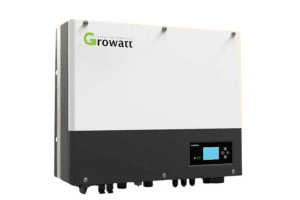
Growatt inverterString inverters, also known as central inverters, are the oldest and most common type of solar inverter in use today. They work by connecting a string of solar panels to one single inverter, which converts the total DC input into AC output.

Pros: Because string inverters are the oldest type of solar inverters, they are also the most reliable. After years of being on the market and used in thousands and thousands of solar panel installations, string inverters have had most of the earlier pitfalls worked out. They are also the least expensive solar inverter option.

String inverters are also usually installed in an easy to access location in your home. This allows for easy access to monitor, repair, or replace the inverter.

Cons: While string inverters are reliable, they are also less efficient at optimizing solar energy output. Because string inverters are connected to an entire string of solar panels, shading on one solar panel will cut the power output of the entire string.

Also, string inverters only offer total-system monitoring as opposed to panel-level monitoring. This can be a disadvantage when diagnosing issues with solar production, and it can also be unfortunate for those solar homeowners who want a more granular level of monitoring. 

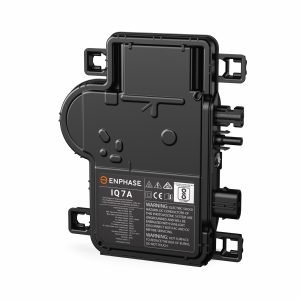
micro-inverterMicro-inverters work by converting DC to AC directly from the back of each solar panel. Therefore no string (central) inverter is necessary because each micro-inverter converts the DC to AC immediately and then sends it straight on to your electric/fuse/breaker box, for use in your home.

Pros: Because each micro-inverter is converting the DC to AC on each panel immediately, the solar panel array will only be minimally impacted by shading on individual panels. If shade covers one panel, only that panel will produce less power output as opposed to the whole system output decreasing, as in a string inverter setup.

Micro-inverters are also easy to expand with your solar system in the future should you add to your current array. Any solar panel that is added to the system just needs to have a micro-inverter installed on the back of the panel.

As with power optimizers, micro-inverters also allow for panel-level monitoring of the solar system, which allows for any solar output issues to be diagnosed more easily and accurately through remote monitoring software.

Cons: Micro-inverters are a little more expensive than other solar inverter options. That aside, their benefits can easily outweigh the higher costs in certain situations, especially if shading is an issue.
power-optimiserSolar Power optimisers are located on the back of each solar panel, and they work in conjunction with a string inverter to convert DC to AC. They do this by conditioning the DC electricity from each panel and sending that conditioned DC to the string inverter to convert to AC electricity.

Pros: Because power optimisers can condition the DC electricity produced by each individual solar panel, they can decrease the impact of shading on individual panels. If one solar panel is partially shaded, it will not degrade the output of the entire string as with a simple string inverter setup.

Power optimisers also have the benefit of allowing panel-level monitoring, along with system-level monitoring thanks to the string inverter. This means any issues with solar output can be diagnosed more easily, with each solar panel being monitored individually. It also allows the homeowner to see a more detailed level of monitoring.

Cons: Power optimisers are more expensive than using just a string inverter, but they are still less expensive than micro-inverters.

Power optimiser systems also require additional power optimisers and potentially additional string inverters if you expand your solar panel system in the future.

Why Microinverters Seem the Best, But Aren’t Always the Best Choice

FeatureMicroinverters Win
Panel-level MPPT
Shade tolerance
Safety (no high-voltage DC on roof)
Expandability
Independent panel operation (no single point of failure)
Long warranties (often 25 years to match panels)

What the Table Doesn’t Show, The Hidden Trade-offs

FactorOptimisers May Be Better
Cost per wattMicroinverters typically cost £500 – £1000 + more on a 4kW system
Labour timeMicroinverters mean more AC connections on the roof, longer install times
MaintenanceMicroinverters = electronics on the roof, harder to replace if one fails
Efficiency in UK climatesMicroinverters work great in hot Countries; UK’s lower irradiance + cost-conscious buyers often favour optimisers
Component varietyWith optimisers, you can pair with any string inverter brand; more flexibility than being locked into Enphase, etc.
Commercial-scale suitabilityOptimisers scale better; microinverters become impractical above ~10kW

Analogy: Microinverter vs Optimiser Decision

Microinverters are like giving each child their own private tutor, laptop and testing suite, great if budget allows, but expensive and maybe overkill for a classroom.

Power Optimisers give each child a teaching assistant while still keeping a central teacher. Most get the benefit of extra support, without paying for a personal tutor for every student.

Which Is Right for Your Roof?

In a perfect world, all panels would face the same way with zero shade. But in the real UK housing stock, that’s rarely the case.

  • Have chimneys, trees, or dormers? Optimisers help mitigate shade.

  • Complex or multi-pitched roof? Panel-level control gives you better yield.

  • Want to expand later? Microinverters scale better.

  • On a budget? Optimisers deliver 80 -90% of the benefit for a lower price.

Not sure where to start? Read the guide that fits you best:

Do you have shading for parts of the day on your roof? Is your roof multi-faceted?
Speak to our solar electrical engineers about the most suitable inverter type for your solar system.
See what's possible. Click your area from the key locations below.

Are Solar Panel Optimisers Worth the Extra Cost?

Yes, especially in the UK climate. Optimisers make your system smarter, safer, and more productive. While they cost more upfront than a basic string system, they often pay for themselves within a few years through improved generation and system insight.

Microinverters offer even more but the step-up in price isn’t always justifiable, especially for smaller residential systems under 4kW.


Installer Verdict: What We Recommend

At Solar Panel Installers UK, we rarely recommend basic string systems unless the roof is ideal. In most cases:

  • For homeowners: Optimisers are the sweet spot between price and performance

  • For businesses: We’ll assess roof layout, safety needs, and expansion plans, microinverters or optimisers both offer strategic advantages

Still unsure? We can simulate both options during your quote.


FAQ's

What is the difference between micro-inverters and DC optimisers?
Micro-inverters convert DC to AC at each panel, while DC optimisers keep a central string inverter but optimise each module’s output.

When are panel-level solutions worth it?
They are valuable where roofs have multiple orientations, complex layouts or shading. They also improve monitoring and simplify future expansion.

Do micro-inverters or optimisers increase energy yield?
They help reduce losses from shade and mismatch, so real-world yield can improve on complex roofs. On simple, unshaded arrays a string inverter may be sufficient.

Is maintenance different from a standard system?
Maintenance is similar. Module-level monitoring helps spot issues early, and single units can be replaced without affecting the whole system.

Final Word

If you want the best performance from your solar system, especially on a less-than-perfect roof, then power optimisers are absolutely worth considering. They’re the modern standard for most UK homes. And if you’ve got the budget, microinverters offer unmatched performance, safety, and scalability.

Either way, you’re in control.

Ready to design the right system? Book Your Free Solar Assessment for your property. today. Choose your preferred contact method below. 

We’ll show you exactly how much more power you could be generating with a smarter inverter setup.

Call now for expert solar panel installation services