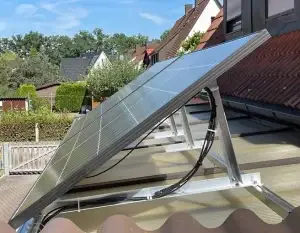
 Solar PV panels, also known as photovoltaic panels, are modules that convert sunlight (UV rays) into electricity, offering a sustainable energy solution for both homes and businesses. These panels harness solar energy to generate clean power, reducing reliance on fossil fuels and lowering energy bills. As the demand for renewable energy grows, so does the potential for solar installations to provide significant financial and environmental benefits.
For homeowners, solar panels enable the generation of electricity from a clean, renewable source, often resulting in substantial long-term savings on energy costs. Businesses can leverage solar power to enhance their sustainability profile while reducing overhead expenses associated with energy use. Solar Panel Installers UK are equipped to guide you through the installation process, ensuring that you benefit from the full potential of solar technology.
Understanding how solar PV panel’s function is key to appreciating their advantages. These modules capture sunlight through solar cells, generating direct current (DC) electricity, which can then be converted into alternating current (AC) for use in homes and businesses. By choosing solar energy, you are investing in a cleaner future and contributing to the fight against climate change.
The Science of Photovoltaics
The photovoltaic effect is the underlying principle that enables solar cells to generate electricity. When sunlight, composed of photons, strikes a solar cell, it energises electrons in the semiconductor material. This interaction creates an electrical current, as the freed electrons move rapidly through the material.
Solar cells are primarily made from silicon, which functions effectively as a semiconductor. Silicon can be doped with other materials to create two types of layers: n-type (with extra electrons) and p-type (with a deficiency of electrons). These layers form a p-n junction, which activates and causes the generation of voltage.
To improve all round efficiency, solar PV panels/cells often feature an anti-reflective coating, minimising the loss of sunlight. This coating significantly increases the amount of light absorbed, allowing for optimal performance in generating electricity.

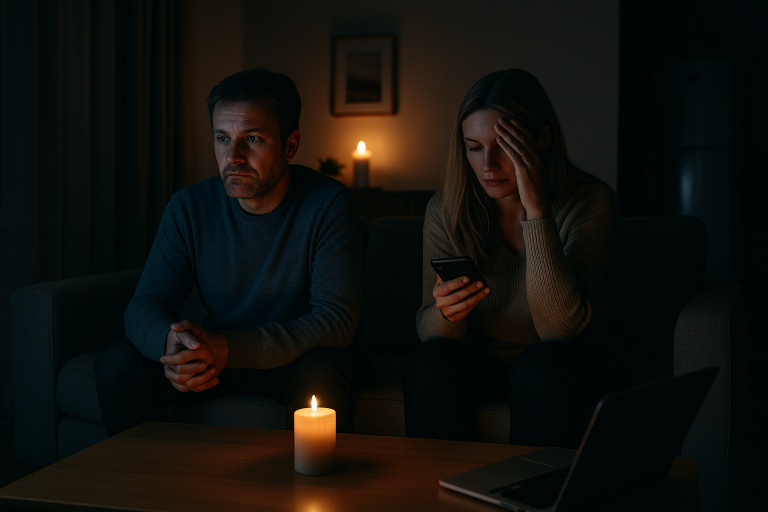
On 28 April 2025, at 12:33 CEST, Spain experienced a massive nationwide power cut. Whole towns plunged into darkness. Fridges stopped. Broadband died. Mobile phone networks were overloaded. Businesses halted. Homes sat in silence, no heating, no cooling, no clue how long it would last.
Now imagine for a moment:
It’s 6:30PM in November.
You’re halfway through cooking dinner.
The power cuts out.
And stays out.
No lighting. No Wi-Fi. No heating.
No way to charge your phone.
No updates. No clue what’s going on.
It’s not just inconvenient. It’s helpless.
“But I’ve Got Solar, So I’m Covered, Right?”
Not necessarily.
Most grid-tied solar PV systems automatically shut down during a power cut. Why? Safety, so your system doesn’t send electricity back to the grid while engineers are working on repairs.
That means even if the sun is shining and your battery is charged, your home might still go dark, unless you have something else in place…
Introducing: Full Home Back-Up
A full home back-up system is exactly what it sounds like, a way to keep your entire home running during a power cut.
Here’s how it works:
Your solar panels and battery charge as normal during the day.
If the grid goes down, a smart backup inverter kicks in automatically.
Your battery powers the circuits in your home; lights, fridge, Wi-Fi, sockets, without interruption.
If you’ve got enough storage, you can run your home for hours or even days.
Who Needs Full Home Back-Up?
 Families who want reassurance that the heating will stay on, the oven will still cook dinner, and the kids won’t be left without a nightlight.
Homeworkers and business owners who rely on broadband, laptops, and a stable environment to keep things running.
Anyone who values energy independence and doesn’t want to rely on the luck of the grid.
Peace of Mind You Can Feel
Power cuts are no longer a third-world problem. The UK grid is under pressure, and the risk is growing, whether from weather, ageing infrastructure, or energy demand spikes.
With a full home back-up system:
Your lights stay on.
Your food stays cold.
Your home stays liveable.
It’s about comfort, control, and confidence, no matter what’s happening outside.
Want to Know If It’s Right for You?
We’ll show you what’s possible based on:
Your energy needs
Your home layout
Your existing (or planned) solar system
There’s no guesswork, no jargon, and no obligation. Just clarity.
Get in touch for a free, personalised quote and discover how solar, battery storage, and full home back-up could keep your home powered, even when the rest of the street goes dark.