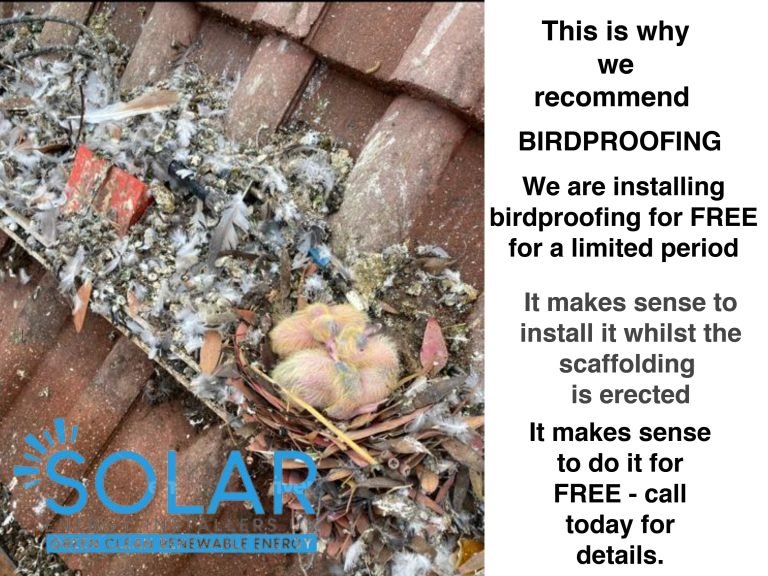
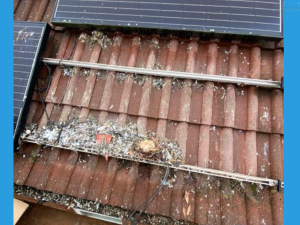
 Bird droppings can contain corrosive substances that damage solar panels. According to studies, bird droppings can reduce solar panel efficiency by up to 25%. The accumulation of nesting materials can block sunlight and create moisture, leading to further degradation.
Pigeons tend to favour solar panels as nesting sites. Their nests can obstruct ventilation, leading to overheating and increased wear. When pigeons roost under panels, they increase the risk of fire hazards due to accumulated flammable materials.
Addressing these issues with effective bird proofing can prevent long-term damage and minimise future costs. This proactive approach protects both the panels and the surrounding structural integrity of your roof. It is best installed in tandem with a new solar panel installation when the access equipment is available. This will save a lot of money versus a retro-fit.
Solar Panel Bird Protection Options
Various bird proofing strategies can be used to safeguard solar panels. Physical barriers like metal mesh and netting can prevent birds from nesting under the panels. These options are often custom-fit and can easily blend with the aesthetics of the roof.
Anti-roosting spikes are another effective deterrent, making it uncomfortable for birds to perch. For broader areas, ultrasonic devices emit sounds that discourage birds without being harmful.
Consider replica predators or predator decoys as a natural deterrent to keep birds at bay. Professional pigeon proofing services can offer tailored solutions that ensure your solar panels remain efficient and protected from potential damage.
Costs and Considerations for Bird Proofing Solar Panels
Bird proofing solar panels involves various costs and decisions about installation methods. Several options exist, including materials and professional services, which can affect overall the overall expense. Understanding these can help homeowners make informed choices to protect their solar investments.
Evaluating the Costs of Bird Proofing
When considering pigeon proofing for solar panels, the cost of materials is a significant factor. Common solutions include mesh netting and bird spikes. For example, mesh netting usually costs between £100 and £300, depending on the size of the installation (number of panels) and quality of materials, not forgetting the access equipment.
Bird spikes typically range from £15 to £30 per linear foot. A full installation may total between £200 and £500, depending on the type chosen and the space that needs protection.
Additionally, for larger systems, the cost to pigeon proof can reach £1,000 to £1,500, particularly when using multiple methods or engaging professional services. Maintenance costs, although generally low, should also be factored into ongoing expenses.
Professional vs. DIY Installation
Homeowners can choose between professional pigeon proofing or DIY options. Professional installation typically costs more due to labour costs, which can vary greatly from one contractor to another. Engaging a professional may guarantee proper installation and compliance with safety regulations.
DIY installations can save money, with the primary expenses being material costs, potentially around £100 to £300 for supplies. However, effective installation requires careful planning, and some methods, like netting, may necessitate certain skills. Before proceeding, assess your comfort level and the potential risks involved in a DIY project.