
Introduction

As an MCS qualified solar installer, we understand the critical importance of efficient and effective installation procedures that maximise the benefits of renewable energy systems for homeowners. This guide outlines a hypothetical installation procedure for integrating a solar PV system with battery storage alongside solar panels and a renewable heating system, highlighting the benefits of air source heat pumps. This approach ensures cutting energy costs and provides a robust solar energy solution. The reason for utilising this comprehensive procedure is to deliver maximum energy efficiency, sustainability, and financial returns for homeowners through a significant solar panel investment.

Step-by-Step-Installation-Procedure-A-checklist-with-a-wrench-and-screwdriver-with-clear-steps-marked.webp

Step-by-Step Installation Procedure

1. Initial Consultation and Site Assessment

Purpose: To assess the suitability of the property for solar and renewable energy installations.

Process:

Conduct an on-site evaluation to determine the optimal placement for solar panels and air source heat pump (ASHP) installation.
Evaluate the roof’s condition, orientation, and shading to ensure maximum solar exposure.
Analyse the property’s energy consumption patterns to tailor the system to the homeowner’s needs.

Features and Benefits:

Customised solutions that maximise energy generation and efficiency.
Personalised assessment ensures that the installation meets the homeowner’s specific energy requirements.

Design-and-Planning-A-blueprint-with-a-pencil-and-ruler-with-a-solar-panel-design-visible.webp

2. Design and Planning

Purpose: To create a detailed plan for the solar PV system, battery storage, and ASHP installation.

Process:

Design the solar PV array layout using advanced software to predict energy yields.
Plan the integration of battery storage to enhance energy independence and efficiency.
Design the ASHP system, considering the property’s heating requirements and space availability.
Obtain necessary permits and approvals from local authorities.

Features and Benefits:

Precise design maximises energy production and storage capabilities.
Comprehensive planning ensures compliance with regulations and optimal system performance.

Solar-PV-System-Installation-A-solar-panel-being-installed-on-a-roof-with-a-sun-in-the-background.webp

3. Solar PV System Installation

Purpose: To install the solar panels, inverters, and mounting systems.

Process:

Install mounting brackets and rails on the roof, ensuring they are secure and properly aligned.
Attach solar panels to the mounting system and connect them to the inverters.
Install inverters in a location that allows easy access and optimal performance.
Conduct wiring to connect the solar PV system to the home’s electrical system and the grid.
Features and Benefits:

High-quality solar panels and inverters ensure reliable and efficient energy generation.
Professional installation guarantees system safety and longevity.

Battery-Storage-Installation-A-battery-with-wires-and-connectors-with-a-charging-symbol.webp

4. Battery Storage Installation

Purpose: To enhance energy storage and utilisation efficiency.

Process:

Install battery storage units in a safe and accessible location, typically in a garage or utility room.
Connect the battery storage system to the solar PV system and the home’s electrical system.
Configure the battery management system to optimise charging and discharging cycles based on energy usage patterns.
Features and Benefits:

Increased energy independence by storing excess solar energy for use during non-sunny periods.
Enhanced ability to cut energy costs by reducing reliance on grid electricity.
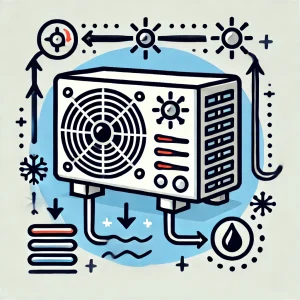
Air-Source-Heat-Pump-ASHP-Installation-A-heat-pump-unit-with-air-flow-arrows-indicating-heating-and-cooling.webp

5. Air Source Heat Pump (ASHP) Installation

Purpose: To provide a renewable heating solution that utilises the ambient air temperature.

Process:

Install the ASHP unit outside the home, ensuring it has sufficient space for air circulation.
Connect the ASHP to the home’s existing heating infrastructure.
Integrate the ASHP system with the solar PV and battery storage systems for optimal efficiency.
Test the ASHP system to ensure it operates efficiently and effectively.
Features and Benefits:

Provides a sustainable heating solution that significantly reduces energy costs and carbon footprint.
Consistent and reliable heating sourced from renewable ambient air energy.

Integration-and-System-Testing-A-computer-screen-with-system-diagrams-and-a-checkmark-indicating-successful-testing.webp

6. Integration and System Testing

Purpose: To ensure all components work together seamlessly and efficiently.

Process:

Integrate the solar PV system, battery storage, and ASHP into a unified energy management system. Ask us about Myenergi Products: These allow you to manage, maximise, monitor and divert your energy. [Heat water, charge EV etc.] 

Conduct comprehensive testing of all components to verify performance and safety.
Calibrate the system settings to optimise energy production, storage, and usage.
Features and Benefits:

Integrated systems provide a cohesive energy solution that maximises efficiency and performance.
Thorough testing ensures reliability and safety for the homeowner.

User-Training-and-Handover-A-person-with-a-clipboard-explaining-to-another-person-with-a-house-and-solar-panels-in-the-background.webp

7. User Training and Handover

Purpose: To educate the homeowner on the operation and maintenance of the new energy systems.

Process:

Provide detailed instructions and demonstrations on using the solar PV system, battery storage, and ASHP.
Explain the benefits of each component and how they work together to reduce energy costs.
Offer guidance on monitoring system performance and maintaining the equipment.

Features and Benefits:

Empowering homeowners with knowledge ensures they can fully utilise and maintain their new energy systems.
Clear understanding of system benefits and operation promotes satisfaction and long-term use.

Reasons for This Procedure
Maximising Energy Efficiency

By integrating a solar PV system with battery storage and an ASHP, this procedure ensures the highest level of energy efficiency for the homeowner. The combination allows for the generation, storage, and efficient use of renewable energy, reducing reliance on grid electricity and fossil fuels.

Cutting Energy Costs
The primary goal is to significantly cut energy costs for the homeowner. Solar panels generate free electricity from the sun, while battery storage ensures that excess energy is used during peak times or when solar generation is low. The ASHP provides efficient heating, further reducing energy bills.

Environmental Benefits
This procedure supports the homeowner’s commitment to sustainability by utilising renewable energy sources. Solar energy and air source heat reduce carbon emissions, contributing to a cleaner environment.

Financial Returns
A well-designed and integrated system offers substantial financial returns on the initial solar panel investment. Homeowners can benefit from reduced energy bills, potential government incentives, and increased property value due to the installation of renewable energy systems.

Features and Benefits for the Homeowner
Solar PV System

Features:

High-efficiency solar panels.
Advanced inverters for optimal energy conversion.

Benefits:

Generate clean, renewable electricity.
Reduce dependence on grid power.
Battery Storage

Features:

High-capacity battery units.
Intelligent battery management system.

Benefits:

Store excess solar energy for later use.
Increase energy independence and savings.
Air Source Heat Pump (ASHP)

Features:

Efficient ASHP unit.
Reliable and effective heating system.

Benefits:

Provide consistent and renewable heating.
Lower heating costs and carbon footprint.
Integrated Energy Management

Features:

Unified control system for solar, battery, and ASHP.
Comprehensive monitoring and performance tracking.

Benefits:

Optimise energy production and usage.
Ensure seamless operation of all components.

Summing up then…

This comprehensive installation procedure combines the strengths of a solar PV system, battery storage, and an air source heat pump to deliver a superior solar energy solution. By focusing on maximising energy efficiency, cutting energy costs, and providing substantial financial and environmental benefits, this approach ensures that homeowners receive the best possible return on their solar panel investment. With professional installation, integration, and user training, homeowners can enjoy the benefits of renewable energy for years to come.

Click here to contact us and discover your own beneficial and  bespoke solar energy system options.

Leave a Reply

Your email address will not be published. Required fields are marked *