
*No obligation. No cost. Built around your property and future plans.
We use cookies to improve your experience and to help us understand how our website is used. You can choose to accept all cookies or manage your settings. For more information please see our Privacy and Cookie Policy.
You can control which types of cookies you allow. Necessary cookies always run because they help the website function.
We use cookies to improve your experience and to help us understand how our website is used. You can choose to accept all cookies or manage your settings. For more information please see our Privacy and Cookie Policy.
You can control which types of cookies you allow. Necessary cookies always run because they help the website function.
*No obligation. No cost. Built around your property and future plans.
A solar panel and battery storage system is often explained as a list of equipment.
Panels generate electricity.
An inverter converts it.
A battery stores it.
The home uses it.
That explanation is technically correct, but it does not necessarily help a homeowner picture what is actually happening.
Terms such as DC, AC, hybrid inverter, MPPT and usable battery capacity can quickly make a relatively understandable idea sound unnecessarily complicated.
So let’s begin somewhere more familiar.
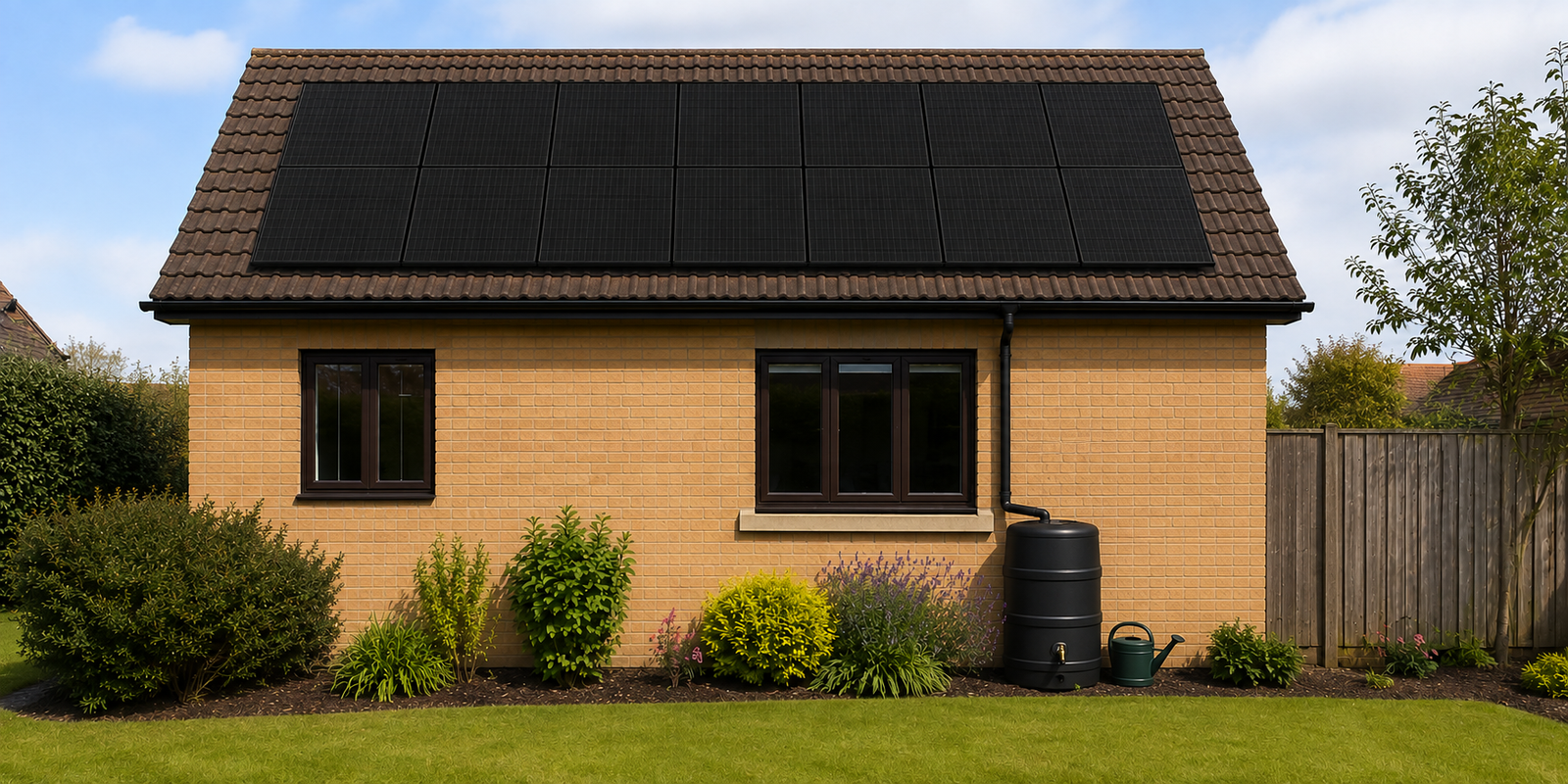
Think about an ordinary roof, some guttering, a downpipe and a water butt.
Rain falls onto the roof. The guttering collects it. The downpipe carries it, and the water butt keeps some of it available for later.
When somebody needs to water the garden after the rain has stopped, they can use some of what was collected instead of turning on the mains tap.
A home solar and battery storage system works on a similar basic principle.
Sunlight reaches the solar panels. The resulting electricity is collected and managed. The home can use some immediately, while suitable surplus electricity can be stored in a battery for later.
When the panels are no longer producing enough electricity, the home may use what was stored rather than purchasing all of the electricity it needs from the grid.
The comparison is not perfect. Electricity must be converted and controlled in ways that rainwater does not.
But once you can picture the roof, downpipe and water butt, the purpose of the panels, inverter and battery becomes much easier to understand.
Solar panels do not create sunlight any more than a roof creates rain.
They capture an available natural resource and turn it into something the household can use.
How much useful electricity they produce depends upon more than the number of panels fitted to the roof.
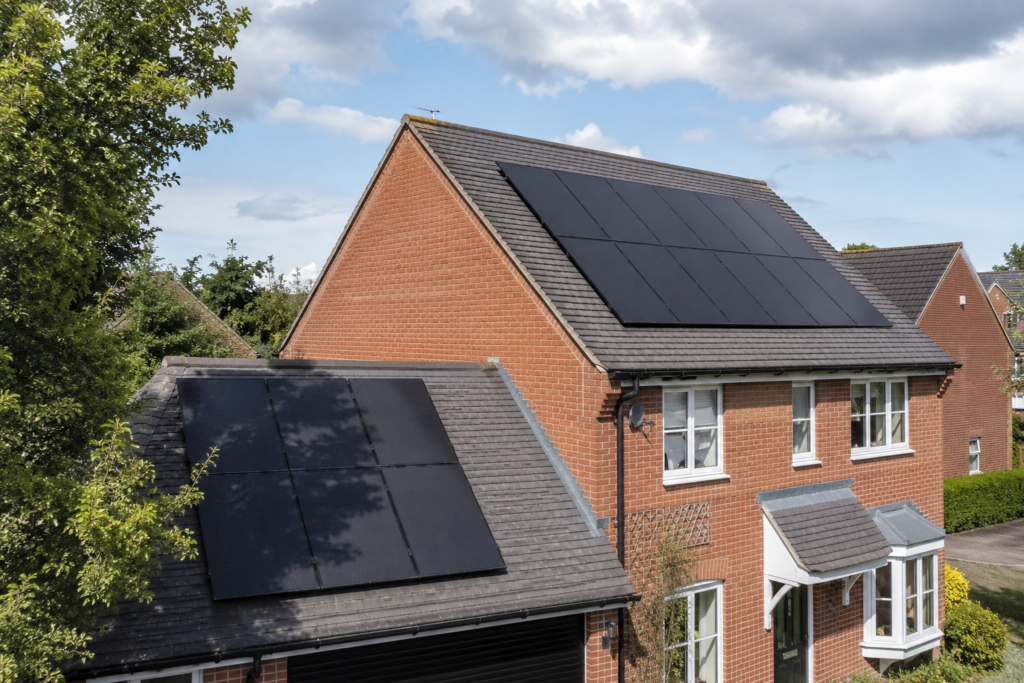
The direction each roof section faces, its pitch, nearby trees and buildings, changing shadows and the available unbroken roof space can all affect generation.
A south-facing roof can offer excellent conditions, but it is not the only useful option. East and west-facing panels can generate electricity across different parts of the day and may suit how some households use energy particularly well.
Shade also needs to be understood properly. A chimney, tree or neighbouring building may affect only one part of the roof, at particular times of day or during particular seasons.
That is why a proper assessment looks at how sunlight reaches the whole roof over time, rather than relying upon one photograph or a quick glance at the available space.
Think again about the rainwater system.
A larger roof may have the potential to collect more rain, but only the water that actually reaches it can enter the guttering.
Adding more guttering does not improve the weather.
In the same way, filling every available section of roof with panels does not automatically create the most suitable solar system.
The objective is to understand where useful generation can be achieved and how that electricity will support the home.
After all, an enormous water butt that rarely receives enough water is not storage.
It is an expensive garden ornament.
The amount of electricity available from solar panels is continually changing.
Clouds move. Panel temperatures rise and fall. Shadows appear and disappear. Different roof sections may receive their strongest sunlight at different times of day.
The system therefore needs to do more than simply connect the panels and hope for the best.
Solar panels are normally connected in groups, often called strings. The electricity produced by each group has a particular combination of voltage and current at which it can deliver its greatest available power.
That point changes as conditions change.
The technology that continually searches for and follows it is called Maximum Power Point Tracking, usually shortened to MPPT.
An MPPT cannot make the sun shine more brightly.
It helps the system make better use of the sunlight that is already available.
Return to our rainwater system.
A detached home may have several roof sections, with separate gutters and downpipes collecting water from each one. A keen gardener might position a water butt beneath more than one suitable downpipe rather than expecting one collection point to manage every part of the roof.
Solar design follows a comparable principle.
Panel groups on different roof orientations or operating under different conditions may be connected to separate MPPT trackers. This allows each appropriately designed group to respond to the sunlight available to it rather than forcing every panel group to operate as though its conditions were identical.
The number of MPPT trackers and the way the panels are divided between them are part of the inverter and system design.
Not every home requires the same arrangement. It depends upon the roof, the number of panels, their orientation, shading and the electrical limits of the selected equipment.
That is why simply reading “two MPPTs” or “four MPPTs” on a specification does not tell a homeowner whether the proposed design is right.
Putting four water butts together at the bottom of the garden may look impressive. They become useful when somebody remembers to connect them properly to the downpipes.
The value lies in how the complete collection system has been designed.
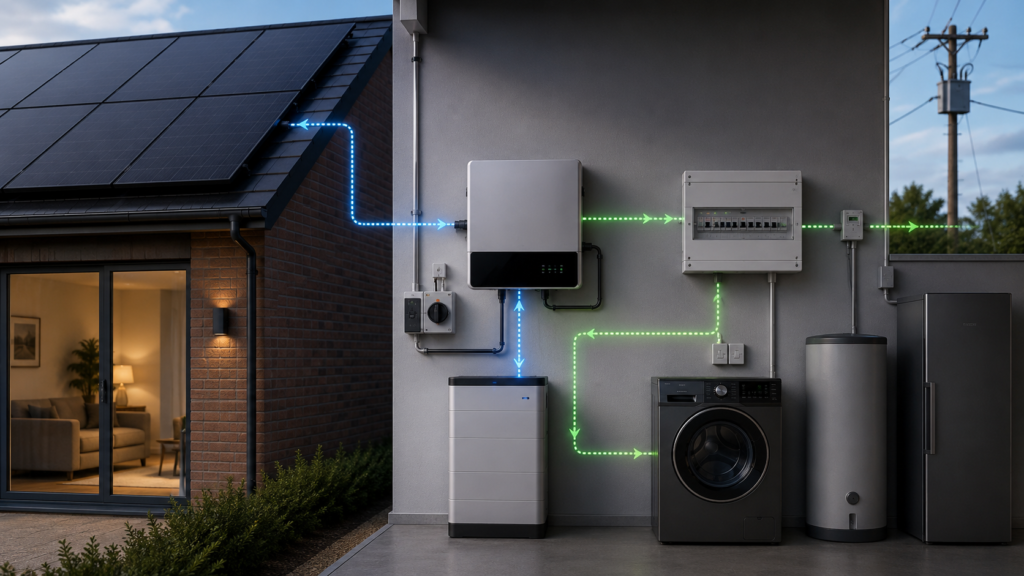
The image above shows why the hybrid inverter sits at the centre of a modern solar-and-battery system.
It connects the electricity being collected by the panels with the battery, the appliances using electricity inside the home and, when necessary, the national grid.
The solar panels produce direct current electricity. The battery also stores electricity as direct current, while most appliances inside the home use alternating current.
The hybrid inverter manages those different jobs within one coordinated system.
During daylight hours, the solar panels may generate more electricity than the household is using.
In a typical setup, the home uses the available solar electricity first.
The hybrid inverter can then direct the surplus into the battery, where it is stored for later. If the battery becomes full and there is still more electricity available, the remaining surplus can be exported to the grid.
This is where the water-butt comparison becomes particularly useful.
When it rains, some of the water naturally falls onto the garden and waters the plants immediately.
Meanwhile, rain falling onto the roof is collected by the guttering, carried down the pipes and directed into one or more water butts.
That collected water is being saved for a time when the rain is no longer falling.
Once the water butt or connected water butts are full, any additional water reaches the overflow. But the water already stored can be used during the drier days that follow.
A solar battery performs a similar job.
It keeps some of the electricity available during daylight hours for a time when the home will need it more. That may be during the evening, overnight or when household electricity use rises above the amount currently being generated by the panels.
The precise priorities can also be configured around the homeowner’s tariff, usage pattern and objectives.
For example, some batteries can be charged with lower-cost grid electricity overnight and used when electricity becomes more expensive. Others may maintain a reserve rather than using every available unit.
A battery is therefore not simply somewhere to put spare solar electricity.
It is a controllable part of the system, designed to decide when stored energy should be kept and when it should be used.
Once homeowners understand what a battery does, the next question is often:
How large should the battery be?
The answer does not begin with the largest capacity available. It begins with how much electricity the household uses, when it uses it and how much surplus solar electricity is realistically available to store.
A battery that is too small may regularly fill early and leave useful solar electricity available for export.
A battery that is unnecessarily large may spend much of its life partly empty because the solar panels rarely produce enough surplus electricity to fill it.
Four enormous water butts are not much of an investment if the garden contains one small window box.
Capacity is not the only consideration either. The rate at which a battery can charge and supply electricity also matters.
A large battery may hold plenty of energy, but it must still be capable of delivering it quickly enough when several appliances are operating at the same time.
It is rather like owning a watering can capable of holding 150 litres.
That capacity sounds impressive, until you discover that nobody can lift it.
The right battery must therefore be considered alongside the expected solar generation, household consumption, evening demand, charging and discharge rates, electricity tariff and possible future requirements.
Those future requirements might include a possible home extension, an electric vehicle, a heat pump or changes in the number of people living at the property.
The objective is not to install the biggest battery that will fit.
It is to specify storage that the household can fill, use and benefit from regularly.
A solar panel and battery installation should not be understood as a collection of separate products.
It should be designed as one complete energy system.
The panels collect what the roof and daylight make available.
The MPPTs help the system find the best available flow.
The hybrid inverter manages collection, conversion, storage and use.
The battery keeps energy available for later.
The home determines when that energy becomes valuable.
A roof, guttering, downpipes and water butts only become useful when they are properly connected and suited to the property they serve.
Solar panels, inverters and batteries are no different.
The number of panels and the size of the battery matter, but they do not tell you whether the complete system will work well for your home.
That depends on how each part has been selected, connected and configured around the way you actually use electricity.
The best solar and battery system is not the one with the most equipment.
It is the one whose equipment works together most effectively.
Understanding how the equipment works together is useful.
Understanding how it should work for your particular home is more important.
Before panels, an inverter or battery capacity are specified, the assessment should consider:
These answers determine how the complete system should be designed.
They help establish how many panels are worthwhile, how the roof areas should be arranged, what inverter configuration is appropriate and whether battery storage is likely to deliver genuine value.
That is why a useful solar conversation should not begin with:
How many panels can we fit?
It should begin with:
How does your home use electricity and what would you like the system to achieve?
A properly designed system connects more than panels, an inverter and a battery.
It connects the available sunlight with the way you actually live.
Every home uses electricity differently. Before panels, an inverter or battery storage are specified, we begin by understanding your roof, your electricity use and what you want the complete system to achieve.
Choose whichever way is easiest for you to start the conversation.