Solar Panel Installation Designed Around Your Home
A solar panel system is often introduced by talking about panel numbers, equipment brands and projected savings.
But none of those decisions should be made before somebody understands your home.
Your roof orientation, shading, electricity use, electrical arrangements and future plans all influence how a solar system should be designed.
The number of panels is the result of that assessment, not the starting point.
No obligation. No sales teams. Built around your property and future plans.
The Roof Does Not Tell Us Everything
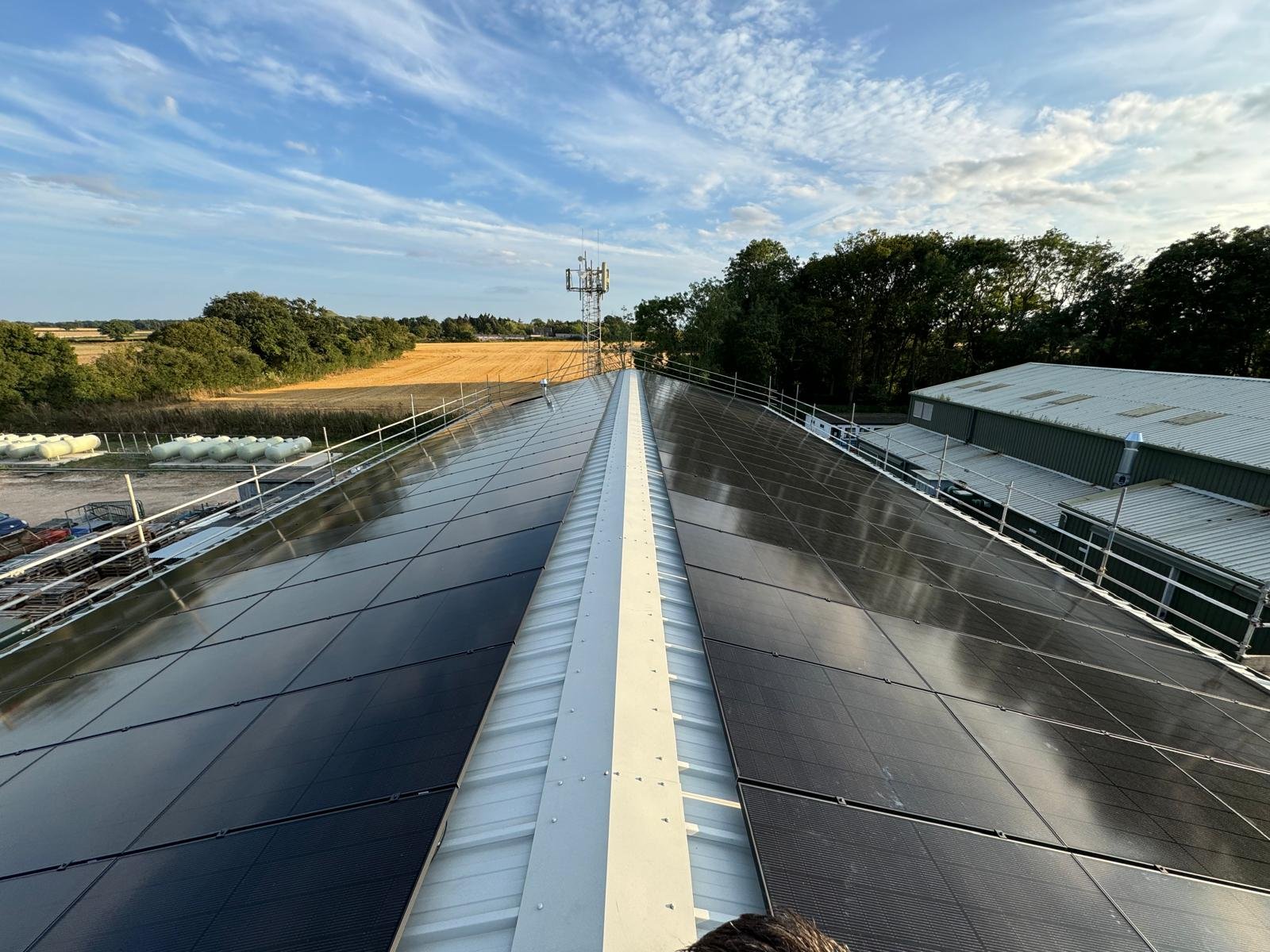
Measuring the available roof space can show how many solar panels might physically fit.
It cannot tell us how many panels will be worthwhile.
Two homes can have roofs of a similar size and still require very different solar systems.
Before a panel layout is produced, the assessment should consider:
- Which direction each usable roof area faces
- The pitch of the roof
- Shading at different times of the day and year
- Chimneys, roof windows, vents and other obstructions
- The condition and structure of the roof
- How much electricity the household uses
- When that electricity is normally required
- Whether battery storage, an electric vehicle or a heat pump may be added
- How the household’s requirements might change in the future
A large, unshaded, south-facing roof may offer excellent generation potential. Another roof may need panels divided between different orientations or managed through separate strings, MPPTs, optimisers or microinverters.
Those are design decisions, not reasons to dismiss the property.
Available roof capacity and appropriate system size are two different things.
Filling every available space can increase the headline system size. It does not automatically improve household savings or long-term value.
The useful question is not simply:
How many panels can the roof hold?
It is:
How much solar generation can this home use, store and benefit from?
That is why our assessment begins with the property and the people living in it, rather than a predetermined number of panels.
PHOTOVOLTAICS IN PLAIN ENGLISH
What Do Photovoltaic Panels Actually Do?
Photovoltaic panels turn daylight into electricity.
They do not need direct sunshine, and they do not generate electricity from heat. Their solar cells respond to light and produce direct current electricity, usually shortened to DC.
The brighter the available daylight, the more electricity the panels can normally generate.
The DC electricity travels from the panels to an inverter. The inverter manages the incoming electricity and converts it into alternating current, or AC, which can be used by appliances inside the home.
From there, the electricity may take several routes:
- It can be used by the home while the panels are generating
- Surplus electricity can be directed into compatible battery storage
- Electricity that is not used or stored can be exported to the grid
- When solar generation is insufficient, the home can draw electricity from the battery or the grid
The panels collect the energy, but the complete system determines how usefully that energy is managed.
This is why panel numbers cannot be considered in isolation. The inverter, battery arrangements, electrical supply and household consumption all influence how the system should be designed.
If you would like to picture the complete journey more clearly, our Solar Decision Library explains it using an ordinary roof, guttering, downpipes and water butts.
REAL-WORLD SOLAR PERFORMANCE
What Determines How Much Electricity Solar Panels Produce?
Every solar panel has a rated output, normally shown in watts.
That rating provides a useful way to compare panels, but it is measured under controlled test conditions.
A panel’s wattage is a specification. It is not a promise that the panel will produce that amount continuously.
Real solar generation changes throughout the day and across the seasons.
It is influenced by:
The direction and pitch of the roof
The amount of daylight available
Shading from trees, chimneys and nearby buildings
Seasonal changes in the height and duration of the sun
Panel temperature
The arrangement of panels across different roof areas
The inverter, MPPT, optimiser or microinverter configuration
Electrical and conversion losses within the complete system
Whether developing faults or underperformance are identified promptly
A higher-rated panel may provide more potential output within a limited roof area. But its performance still depends on where it is installed and how effectively the complete system manages the electricity it produces.
Two homes fitted with identical panels can generate different amounts of electricity.
That does not necessarily mean one set of panels is faulty. The properties may have different orientations, shading, roof pitches or local daylight conditions.
This is why a useful proposal should include a realistic annual generation forecast, not simply the combined peak rating printed on the panel specifications.
Peak output describes the equipment. Expected annual generation describes how that equipment is likely to perform on your home.
A properly considered forecast should account for the property, local solar irradiation and realistic system losses before savings or payback are discussed.
PANEL SELECTION
Why Does Panel Choice Come After The Assessment?
Homeowners often ask which solar panel is best.
It is a reasonable question, but there is no single panel that is best for every property.
The best panel on a specification sheet may not be the most appropriate panel for your roof.
Solar panels vary in several important ways:
Physical dimensions
Rated power
Efficiency
Appearance
Product and performance warranties
Expected degradation over time
Manufacturer support
Compatibility with the proposed inverter and system design
A higher-wattage panel is not necessarily the same physical size as a lower-rated alternative. Larger panels may produce more electricity per panel, but their dimensions can also affect how many will fit safely and neatly around roof edges, chimneys and windows.
Higher efficiency can be particularly valuable when usable roof space is limited. Where plenty of suitable roof space is available, paying more for the highest possible efficiency may not always produce a proportionate benefit.
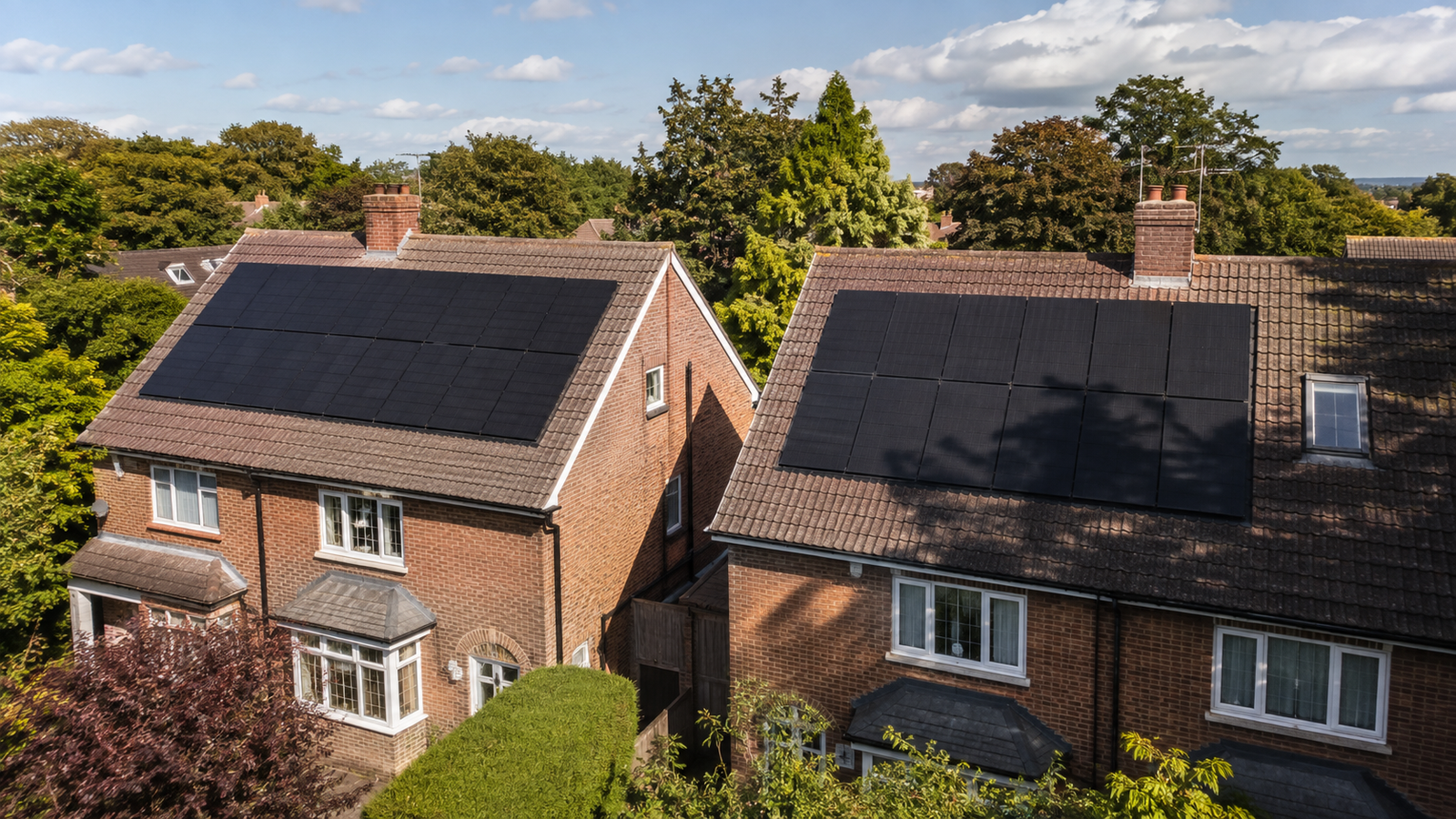
All-black panels can create a cleaner, more consistent appearance on a home. That may be important to the homeowner, but appearance should still be considered alongside performance, warranties and suitability for the complete system.
A premium panel cannot correct a poorly considered layout, unsuitable inverter arrangement or unrealistic generation forecast.
This is why we do not begin by promoting a predetermined panel brand or package.
We first establish what the property requires. We can then compare suitable equipment using the factors that matter for that particular roof and household.
The right solar panel is not simply the one with the largest number printed on its specification.
It is the panel that contributes most effectively to a properly designed, reliable and financially sensible system.
SYSTEM ARCHITECTURE
One Roof May Require More Than One Approach
A simple, unshaded roof facing one direction may suit a straightforward string-inverter design.
A roof with several orientations, changing shade or panels positioned across different elevations may require a different approach.
The equipment should respond to the roof layout, not force the roof into a predetermined system.
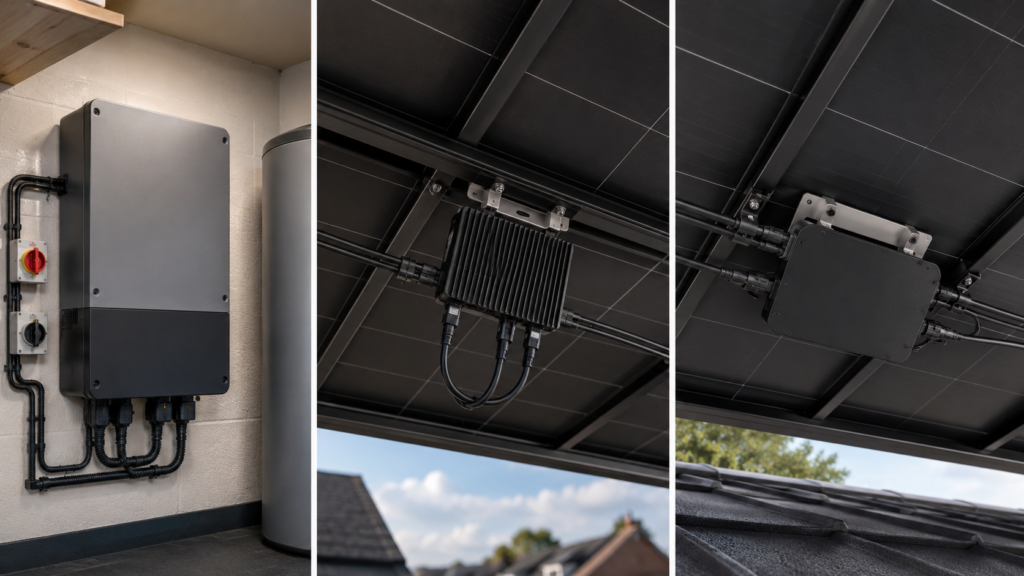
In a conventional arrangement, groups of solar panels are connected in strings. The inverter receives the electricity generated by those strings and uses Maximum Power Point Tracking, usually shortened to MPPT, to find their most productive operating point.
Where panels are divided between different roof orientations, separate strings connected to different MPPT inputs may allow those areas to be managed independently.
Other properties may benefit from panel-level electronics.
Power optimisers manage the DC electricity produced by individual panels before it reaches a central inverter. Microinverters convert DC electricity into AC electricity at each panel.
These approaches can offer advantages where there is:
Partial or changing shade
Several roof orientations
A more complicated panel layout
A requirement for panel-level monitoring
A need to identify individual panel performance
That does not make one architecture universally better than another.
The decision should also consider system cost, battery compatibility, warranty arrangements, accessibility and how faults would be diagnosed or equipment replaced in the future.
Adding panel-level equipment to every roof is not automatically an improvement. Equally, placing every panel into one undifferentiated arrangement may overlook important differences between roof areas.
Good design means using complexity where it solves a genuine problem.
The right approach is the one that manages the property’s actual roof conditions effectively while keeping the complete system reliable, understandable and appropriate for the homeowner.
BATTERY PLANNING
Should Battery Storage Be Considered From The Beginning?
A solar-panel system can operate perfectly well without a battery.
But even when battery storage is not being installed immediately, it is sensible to consider it during the original system design.
Planning for a battery does not mean that a homeowner has to buy one.
It means decisions can be made with a clearer understanding of what may be added later.
That can include:
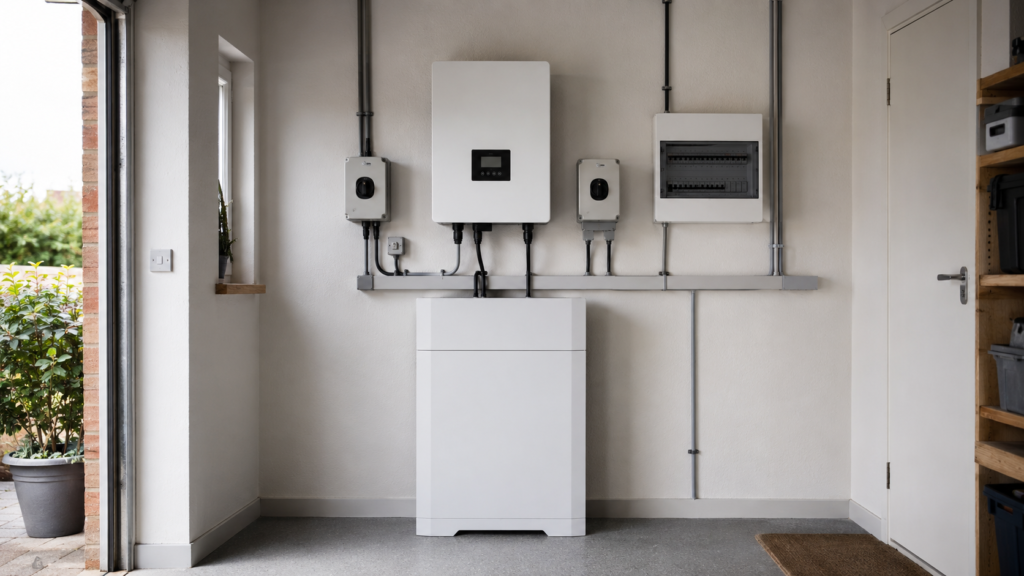
Whether the proposed inverter is compatible with future storage
Where a battery could be installed safely
Suitable cable routes between the equipment
Available wall or floor space
Electrical and consumer-unit arrangements
Expected surplus solar generation
Evening and overnight electricity consumption
Off-peak tariff opportunities
Possible backup-power requirements
Future additions such as an electric vehicle or heat pump
If battery storage is installed with the original solar system, a hybrid inverter may provide a direct and efficient way to manage solar generation, household use and battery charging together.
If a battery is added to an existing solar installation later, an AC-coupled arrangement may be entirely appropriate.
The right solution depends on what is already installed and what the homeowner wants the battery to achieve.
Battery storage should not be included simply because it has become a popular addition to solar. Its usable capacity, charging and discharge rates, compatibility and likely daily use all need to make sense for the property.
It is rather like considering a future extension while the original house plans are still on the table.
You may decide not to build it now. But thinking ahead can prevent today’s decisions from making tomorrow’s options unnecessarily difficult or expensive.
A future battery should not be an afterthought, but it should never be treated as an automatic requirement.
PHOTOVOLTAIC SYSTEM ASSESSMENT
What Happens Before We Recommend A Solar System?
A worthwhile recommendation begins with understanding the property and the people who use it.
We do not begin by choosing a panel package. We begin by establishing what the system needs to achieve.
1. We discuss your reasons for considering solar
Some homeowners want to reduce the electricity they purchase from the grid. Others are planning for battery storage, an electric vehicle, a heat pump or greater energy independence.
Understanding the objective helps prevent the system from being designed around the wrong priority.
2. We examine how and when electricity is used
Annual consumption is useful, but it does not tell the complete story.
We consider daytime demand, evening use, seasonal changes and any future loads that may alter household consumption.
Solar electricity is generally most valuable when the home can use or store it.
3. We assess the roof and surrounding environment
Roof dimensions, orientation and pitch are considered alongside shading, chimneys, roof windows, neighbouring buildings and nearby trees.
The purpose is not merely to discover where panels will fit. It is to understand how different parts of the roof are likely to perform.
4. We consider the electrical arrangements
The consumer unit, incoming supply, earthing arrangements, cable routes and proposed equipment locations may all influence the design.
If battery storage, an EV charger or backup capability is being considered, those requirements need to be understood at this stage.
5. We model expected generation
The proposed layout is assessed using the property’s location, roof orientation, pitch, shading and appropriate system-loss assumptions.
A generation forecast should help a homeowner make a decision. It should not be adjusted simply to make the proposal look more attractive.
6. We design the complete system
Only then do we consider panel numbers, inverter architecture, battery compatibility, monitoring and the equipment required to make the design work properly.
The recommendation may be straightforward. It may also reveal that a different layout, smaller system or future-ready arrangement would be more appropriate.
7. We explain the reasoning
You should understand why the system has been recommended, what it is expected to produce and which assumptions have been used.
The final proposal should be the conclusion of the assessment, not the starting point of the sales conversation.

ENGINEERING, INSTALLATION AND CERTIFICATION
Who Is Responsible For The Finished Solar System?
A solar proposal is only worthwhile if the system that is installed reflects the assessment and design behind it.
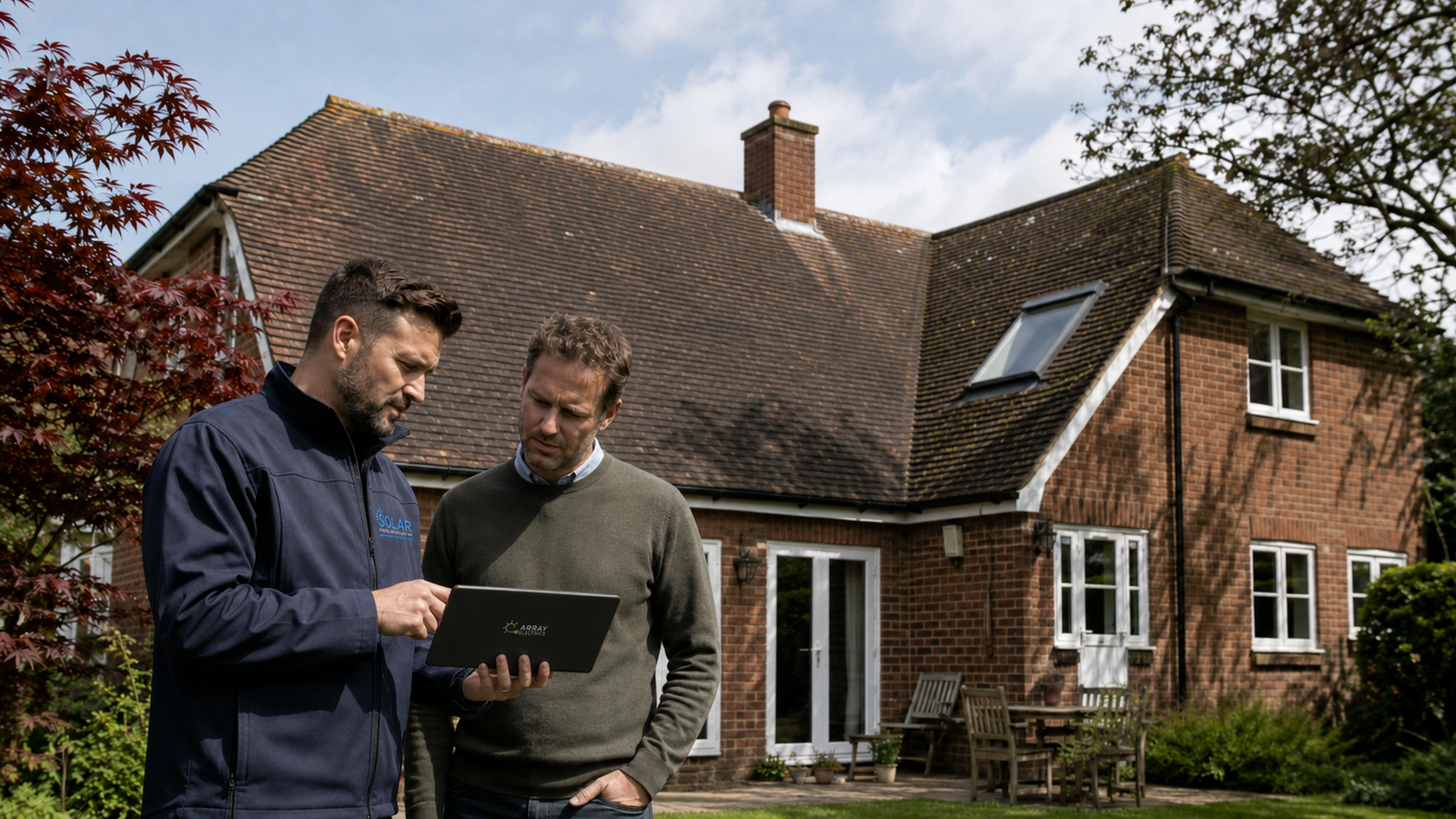
Solar Panel Installers UK provides the homeowner-facing service, helping you understand the decisions, consider the available options and begin the assessment without pressure from a sales team.
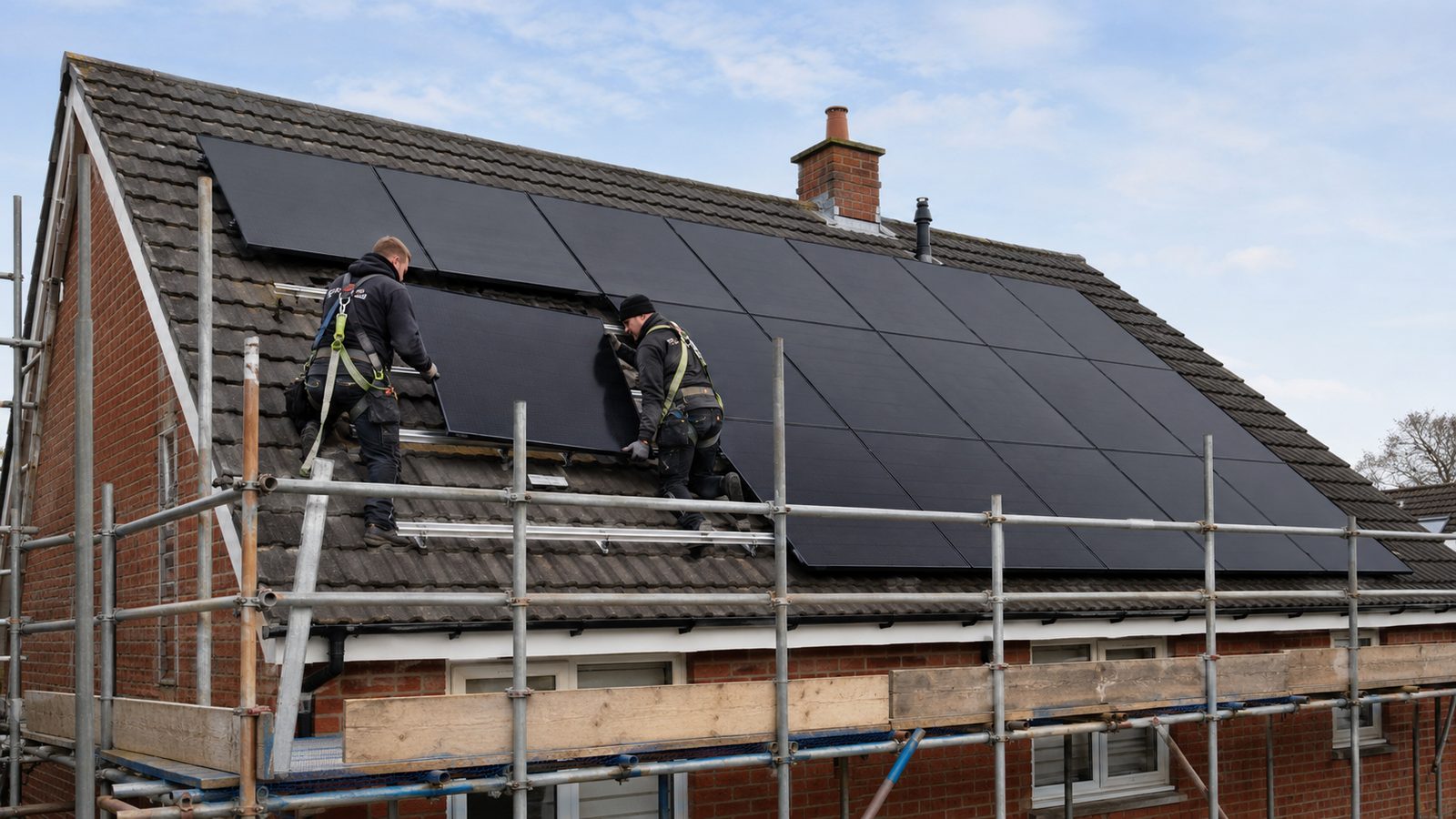
The technical design must then be confirmed by the people who will take responsibility for the installation.
Engineering, installation, testing and MCS certification are provided by Array Electrics Ltd.
Before work begins, the proposed system and property arrangements are technically reviewed. This may confirm the original proposal, or identify something that needs to be altered before equipment is ordered.
That responsibility continues through:
- Confirmation of the panel layout and mounting arrangements
- Inverter and battery compatibility
- Electrical protection and cable routes
- Safe installation and testing
- System commissioning and monitoring setup
- Homeowner handover and certification
The purpose of the technical process is not simply to place panels on the roof. It is to deliver a complete electrical system that performs safely and as intended.
You should also know who to contact, how to view the system’s performance and what documentation has been provided after the installation is complete.
Good installation is not the final flourish added to a solar proposal. It is what turns the proposal into a working system.
UNDERSTANDING THE PROPOSAL
What Should A Solar Panel Proposal Make Clear?
A solar proposal should help you understand the recommendation, not simply present a price and a collection of product names.
The number of panels is important, but it is only one part of the explanation.
A properly considered proposal should make clear:
- The proposed panel layout and total system capacity
- The assumptions used to estimate annual generation
- How orientation, pitch and shading have been considered
- The inverter arrangement and why it is appropriate
- Whether battery storage is included or planned for later
- How much solar electricity the home may use directly
- How surplus electricity may be stored or exported
- The equipment, warranties and monitoring arrangements
- The complete installed cost and anything specifically excluded
Financial projections also need context.
An estimate may depend on future electricity prices, household consumption, export payments, battery use and the proportion of generated electricity used inside the home.
A precise-looking financial figure can still be based on uncertain assumptions.
This does not make projections useless. It means the assumptions should be visible enough for you to decide whether they are reasonable.
A proposal should also explain what happens if the household changes. An electric vehicle, heat pump, home extension or change in working arrangements may alter how useful the generated electricity becomes.
A good proposal does not ask you to believe the largest possible saving. It gives you enough information to judge the likely outcome for yourself.
If something is unclear, ask how the figure was calculated. A worthwhile recommendation should become stronger when questioned, not weaker.
MONITORING AND AFTERCARE
What Happens After The Solar Panels Are Installed?
A solar installation is not complete simply because the equipment has been fitted and switched on.
The system needs to be commissioned, tested and explained to the homeowner. You should know how to view its performance, what normal operation looks like and who to contact if something appears wrong.
Monitoring does not guarantee that a fault will never occur. It helps make changes in performance easier to recognise.
During handover, you should be shown:
- How to access the monitoring platform
- Where to find current and historical generation
- How battery charging and discharging are displayed, where applicable
- What common status messages mean
- How to isolate the system in an emergency
- Who to contact if the system stops operating as expected
The documents provided should include the relevant certificates, equipment information, warranties and details of the installed system.
Generation will naturally vary with daylight, weather and the seasons. A dull winter day should not be compared with a clear summer day, but longer-term monitoring can help reveal unusual changes that deserve investigation.
A solar system should not become invisible simply because it is mounted on the roof.
Panels, inverters and batteries are long-term equipment. Occasional checks, sensible monitoring and prompt attention to warning messages can help protect their performance.
If the household later adds battery storage, an electric vehicle, a heat pump or other significant electrical demand, the existing system should be reviewed before assumptions are made about compatibility or capacity.
Aftercare begins with leaving the homeowner able to understand the system they now own.
Ready To Start The Right Conversation?
Every home uses electricity differently. Before panels, an inverter or battery storage are specified, we begin by understanding your roof, your electricity use and what you want the complete system to achieve.
Choose whichever way is easiest for you to start the conversation.